Mistakes That Worsen Plumbing Emergencies
Certain actions can unintentionally worsen a plumbing emergency
When a pipe bursts, a toilet overflows, or a sewer backs up, instinct pushes homeowners to act fast. That urgency is sensible, but not every immediate reaction helps. Chicago Pipe Essentials sees the consequences of rushed decisions every day: temporary fixes that become permanent problems and simple errors that multiply repair costs. Understanding common mistakes that worsen plumbing emergencies helps you protect your home, limit water damage, and preserve evidence professionals need to diagnose the root issue accurately.
Before you lift a wrench or pour chemical drain cleaner down a sink, take a breath and consider safer alternatives. Acting with a little restraint and knowledge can save thousands of dollars and weeks of disruption. Below you'll find practical guidance on what to avoid, what to do instead, and how calling for expert advice early-call 312-555-4821-can prevent well-intentioned actions from making situations worse.
Dangerous first responses: actions that often increase damage
Turning on additional fixtures, trying to flush a blocked system, or rerouting water without understanding pressure and flow are all common behaviors that amplify damage. For example, running a washing machine or shower while a mainline is compromised can push more water into compromised walls, ceilings, and floors. That added volume widens the area needing repair and increases the chance of mold and structural deterioration. Recognizing which immediate reactions are harmful helps you prioritize containment over fixing in the heat of the moment.
Another critical misstep is failing to isolate the problem quickly. While some homeowners fear shutting off power to sump pumps or heaters, leaving these systems running around a leak can be disastrous. Sump pumps may short out if submerged, and water heaters that continue to operate without adequate water flow can overheat and fail. Instead, identify the correct shutoff valves and local circuit breakers-or call 312-555-4821 for guidance before taking actions that could create electrical hazards or equipment damage.
DIY solutions that backfire and safer alternatives
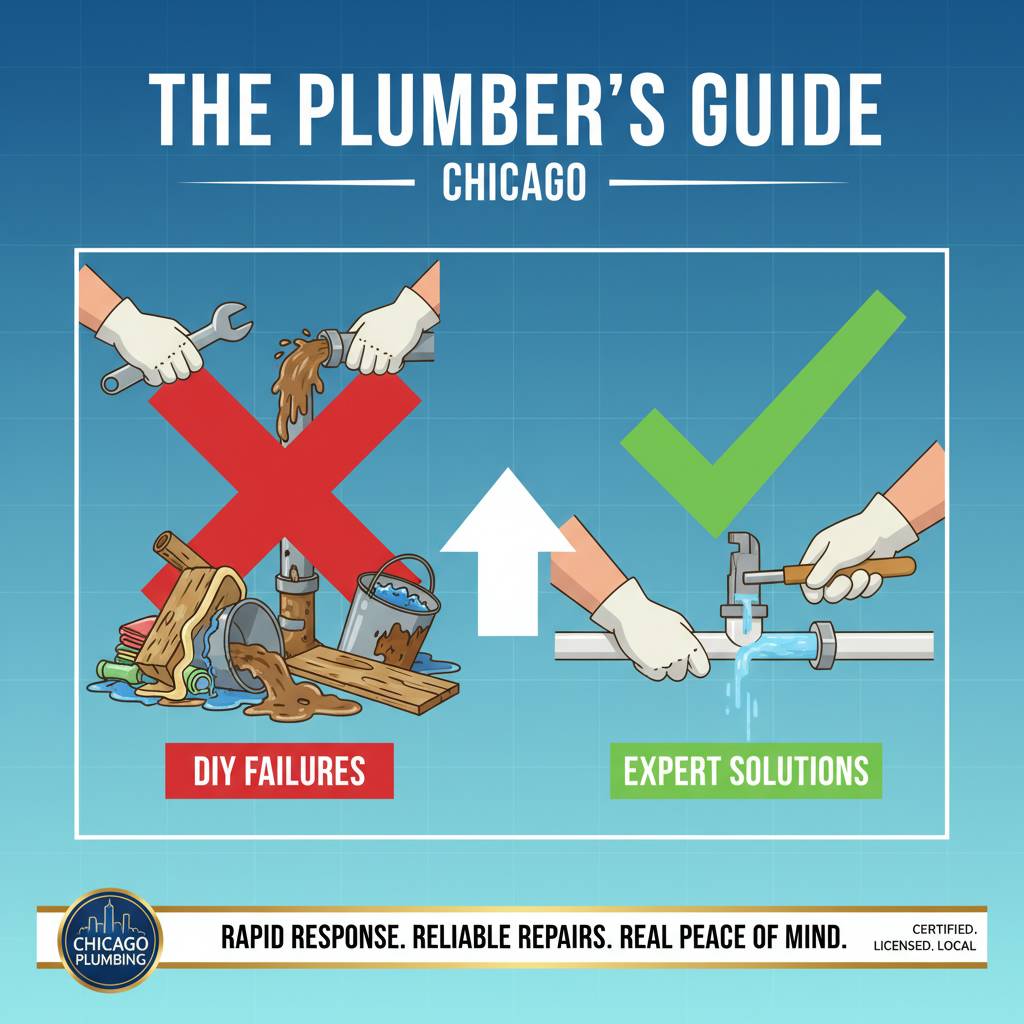 There's a long list of popular do-it-yourself remedies that can do more harm than good. Using a metal coat hanger or a plumbing snake aggressively to clear a clog can tear pipes or damage seals, turning a manageable blockage into a leak. Pouring hot water down PVC drains may warp fittings; chemical drain cleaners can eat through seals and corrode pipes, especially in older systems. Each of these actions can convert a simple clog into a larger, costlier problem.
Safer alternatives include isolating the source, catching and removing standing water, and using non-corrosive mechanical methods gently. A plunger designed for sinks or toilets, a hand-operated drain snake used carefully, or a biodegradable enzyme treatment applied per product instructions are usually less risky. When in doubt, take photos, note odors and noises, and call 312-555-4821 for step-by-step advice-CPE or a technician can guide you on whether an on-site visit is necessary.
Small fixes that need professional judgment
Replacing visible washers or tightening a loose joint might seem straightforward, but if the problem stems from systemic issues-like high water pressure, hidden fractures, or corroded supply lines-these quick repairs only mask the symptoms. Professionals use diagnostic tools such as pressure gauges and video inspections to determine the underlying cause. If a simple repair fails, you won't just pay to fix the original issue but also the compounded damage caused by repeated, temporary attempts.
Tools, products, and techniques that often cause collateral damage
Power augers, high-pressure jetters, and caustic chemical blends are valuable in the right hands but can be destructive in inexperienced ones. Power augers can perforate outdated clay or cast-iron pipes; high-pressure water jetting can loosen joint material or drive debris further into a system. Chemical drain treatments can invalidate warranties and make metal joints brittle over time. Misused tools and products turn interior problems into whole-system failures that require excavation or major replacement.
When you're uncertain about the right tool, pause and ask. Many manufacturers recommend against homeowner use of certain products, and a quick call to 312-555-4821 can prevent you from buying and applying the wrong solution. A skilled technician will advise whether a mechanical clear-out, a camera inspection, or sectional pipe replacement is the appropriate course and will explain short-term containment steps that won't harm future repair options.
When to shut off water, power, or gas-and when not to
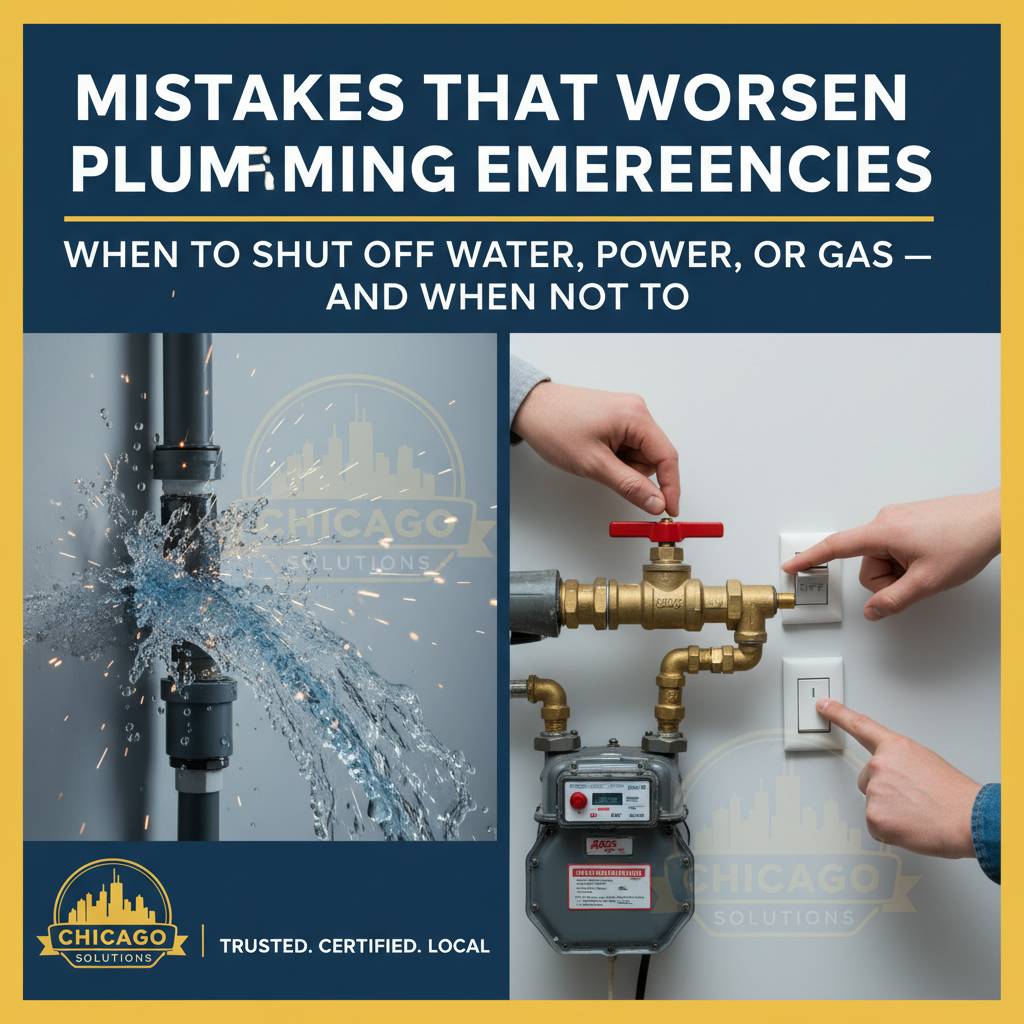 Knowing which systems to isolate immediately reduces risk and can stop worsening conditions. If water is flooding living spaces, shutting off the main water supply is often the correct choice. If you see electrical sparks near a leak or water is pooling around outlets, cutting power to affected circuits reduces electrocution risk. However, indiscriminate actions like turning off a gas supply or power to a sump pump without a clear plan can create new hazards; a sump pump left off during heavy inflow may allow basement flooding to accelerate.
Always consider safety first: if you smell gas, get everyone out of the house and call emergency services. If you're unsure about electrical hazards tied to water, call 312-555-4821 for guidance before touching breakers. Professionals will tell you which valves and switches to use and may prefer to turn systems off themselves after assessing the scene. This measured approach prevents unintentional damage and keeps you safe while protecting evidence that helps diagnose the root cause.
Hidden consequences and long-term costs of rushed fixes
 Even after a visible issue is resolved, short-lived fixes can leave lingering problems. Moisture trapped behind walls can lead to mold growth in weeks, while hairline pipe fractures that were temporarily clamped can expand under pressure and freeze-thaw cycles. These latent damages are expensive to locate and repair because they require demolition, drying, and sometimes structural remediation. Short-term savings from a DIY stopgap can result in long-term expenses far exceeding professional repair costs.
Insurance claims are another area where mistakes matter. Performing work that alters the system or leaves visible corrosion from chemical treatments can complicate coverage or lead to claim denials. Proper documentation-photos before any intervention and notes of steps taken-helps when insurers assess damage. If you call 312-555-4821 first, a technician can advise on documentation and containment steps that preserve insurance options and reduce repair scope.
How professionals approach emergencies differently
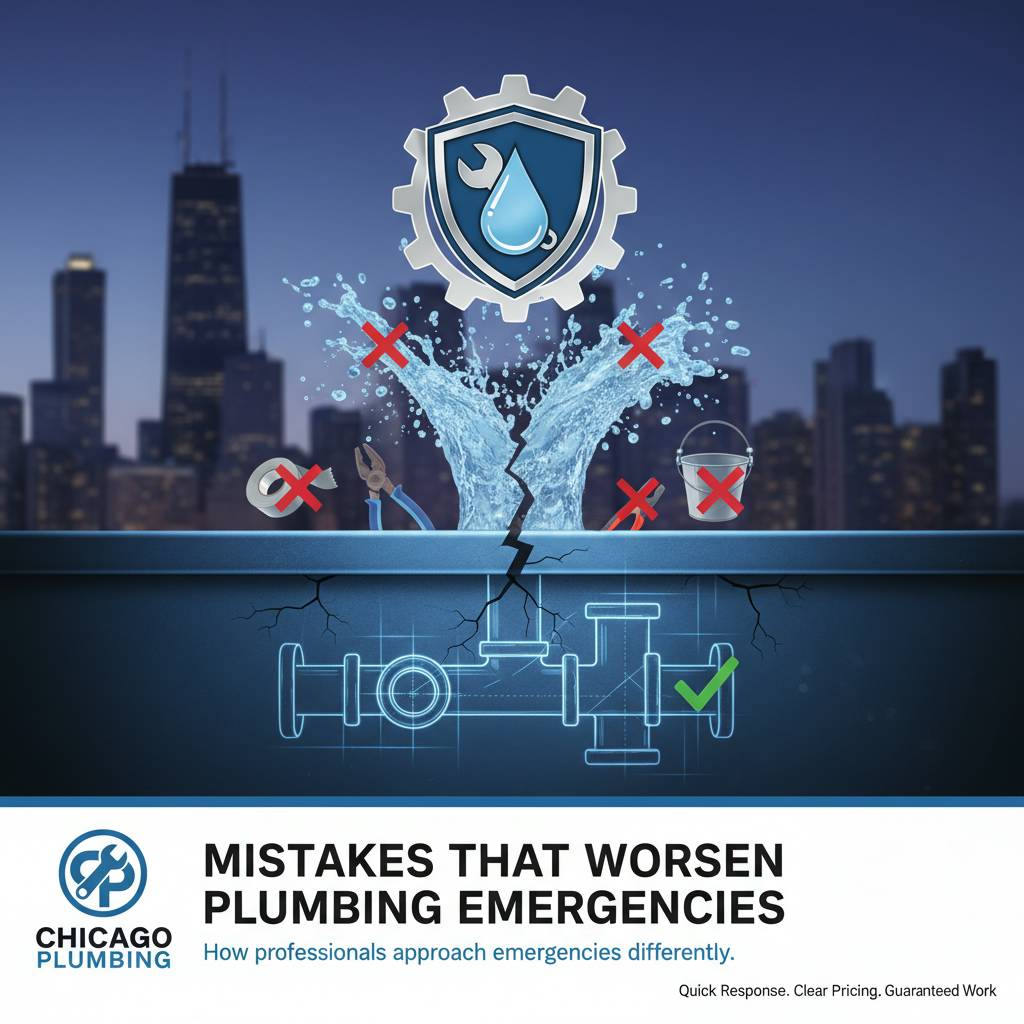 Seasoned technicians follow a methodical process: assess, isolate, document, and repair. They begin with a rapid risk assessment to determine whether to shut water, power, or gas, then document the scene and identify the probable failure point. That documentation informs whether a temporary containment or a full replacement is needed. Professionals use non-destructive diagnostics-like camera inspections and moisture meters-to limit demolition and focus repairs where they will be most effective.
Repair crews also consider the future: they will recommend solutions that prevent recurrence, not just temporary band-aids. That could mean rerouting sections of piping to avoid tree roots, upgrading materials to resist corrosion, or installing backflow preventers to protect against sewer backups. When you choose to call 312-555-4821, you're buying that long-view expertise that minimizes the chance you'll face the same emergency again.
Practical checklist: steps to take immediately and actions to avoid
 In the first minutes of a plumbing emergency, a calm, prioritized approach helps. Start by ensuring people and pets are safe, then isolate the water source if safe to do so. Contain water with towels, buckets, and barriers to limit spread, and move valuables to dry areas. Take quick photos and call a trusted professional for specific advice. Resist the temptation to fix or clear things aggressively without guidance-many common DIY steps are precisely the mistakes that worsen plumbing emergencies.
- Do: Turn off the main water supply if water is actively flooding the home and you can access the valve safely.
- Do: Cut power to affected circuits if water is near outlets or appliances, but avoid stepping into deep water to touch breakers.
- Don't: Pour chemical drain cleaners into backed-up toilets or drains when the source might be a mainline or sewer backup.
- Don't: Use high-pressure tools or force metal objects down drains; these are common mistakes that worsen plumbing emergencies.
- Do: Photograph damage and call 312-555-4821 for immediate expert guidance before taking irreversible steps.
Frequently asked questions and short case examples
Q: If my toilet overflows, should I keep flushing to move the blockage? A: No. Flushing adds water and can force sewage into floors or ceilings. Shut off the toilet's supply valve, contain the mess, and call for help. This avoids pushing contaminants into places that require extensive remediation.
Case example: A homeowner forced a clog with strong drain chemicals, which degraded the wax seal and led to a hidden leak into the floor cavity. The eventual repair required subfloor replacement and new fittings-costs that far outstripped the price of a professional diagnosis.
Q: Can I use a rented power auger on an older home? A: Not without inspecting pipe materials first. Old clay or cast-iron lines can fracture under power tools. A camera inspection, often cheaper than a full replacement after a broken line, is the safer first step. Call 312-555-4821 to arrange a proper evaluation.
Final guidance: what to remember and how Chicago Pipe Essentials helps
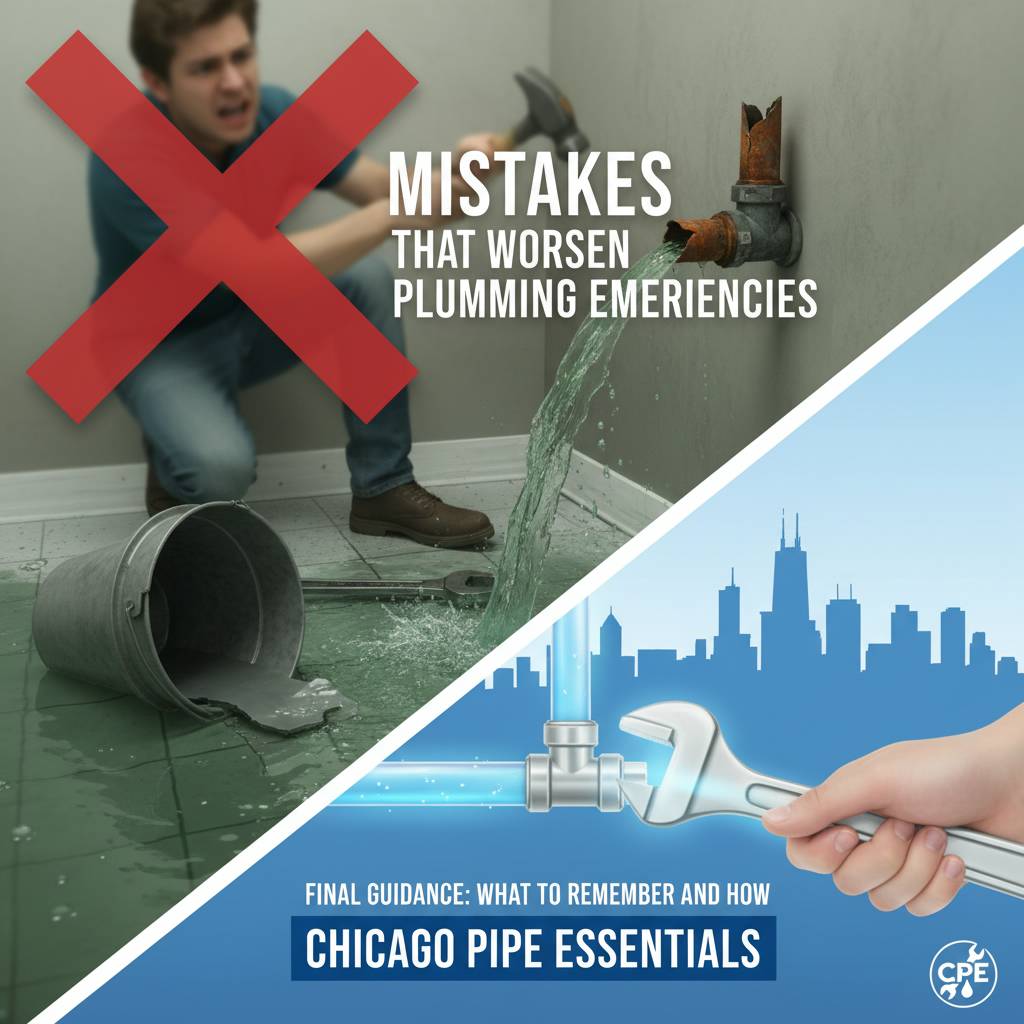 When an emergency occurs, your best move is often containment and documentation rather than hurried repairs. Mistakes that worsen plumbing emergencies typically come from acting without assessment: using corrosive products, applying excessive force, or running devices that exacerbate flooding. Chicago Pipe Essentials provides calm, experienced advice and on-site solutions designed to stop damage quickly and prevent repeat incidents. If you're in doubt, pick up the phone-our experts can talk you through safe next steps right away.
We understand the stress and disruption a plumbing emergency causes, and we aim to protect both your home and your budget. Whether you need immediate triage or a thorough diagnostic inspection, we'll explain options clearly and help you make informed choices. For emergency guidance and professional support, contact Chicago Pipe Essentials at 312-555-4821.
Call to action: If water is present and spreading, shut off the main water supply if it's safe, document the scene, then call 312-555-4821. Our technicians can provide immediate instructions and dispatch help as needed. Don't let quick fixes become costly mistakes-reach out now for prompt, experienced assistance.
We help homeowners avoid costly errors and restore systems efficiently. Reach out to Chicago Pipe Essentials at 312-555-4821 for immediate expert guidance and to arrange a rapid inspection. Protect your home by getting professional advice before taking any steps that could increase damage or repair costs.