Comparison Emergency Plumber Response Versus DIY Delay Outcomes
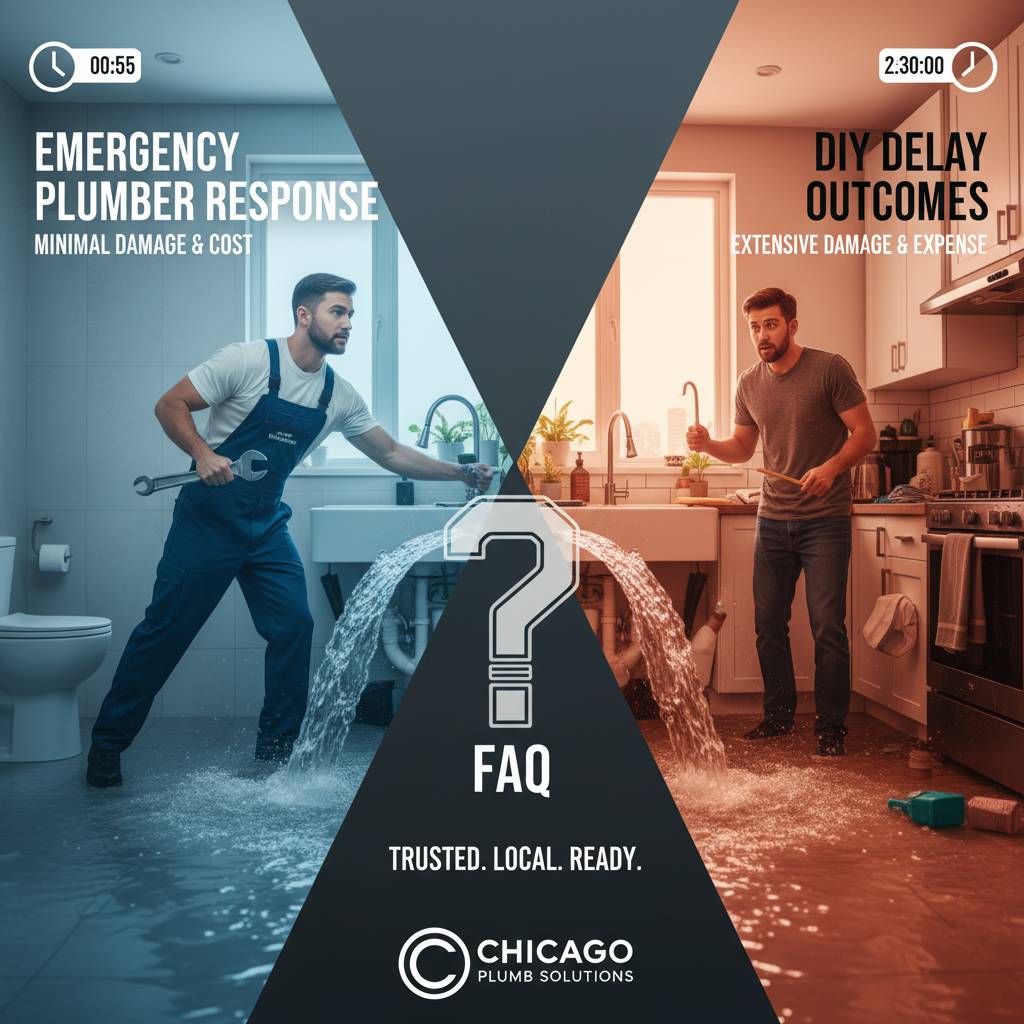
Comparing emergency plumber response versus DIY delay outcomes highlights the potential risks of postponing professional help. Chicago Pipe Essentials presents case studies and practical comparisons to show likely scenarios. Call 312-555-4821 to evaluate your options and choose the safest route. We emphasize professional mitigation to avoid compounding harm.
When a pipe bursts, a toilet overflows repeatedly, or water is backing up into living spaces, the choice between calling an emergency plumber and attempting a do-it-yourself delay can determine both immediate safety and long-term cost. This page examines a clear comparison emergency plumber response versus DIY delay outcomes, focusing on likely timelines, health and structural risks, and the financial impact of waiting to call a professional. Chicago Pipe Essentials aims to help homeowners make decisions that reduce damage and avoid compounding harm.
What an emergency plumber response typically looks like
Emergency plumbers are trained to prioritize rapid containment and clear communication at the outset: they locate the shutoff points, isolate the affected systems, and assess immediate hazards like electrical risks or contaminated water. A professional response usually begins with mitigation-stopping the leak or pump-down-followed by a short-term repair to stabilize the situation. This preserves the structure and reduces the window for secondary damage, such as mold growth or ceiling collapse.
Beyond immediate containment, an emergency service performs a focused diagnostic to identify root causes and advise on permanent repairs. These diagnostics use experience and tools that most homeowners don't have on hand, such as camera inspection for sewer lines or pressure testing. Early, accurate diagnosis reduces the risk of repeated failures that would otherwise occur after a DIY patch-up, saving time and money over weeks and months.
Common DIY delays and the outcomes they produce
 Homeowners often delay calling a professional because the problem appears minor, they want to save money, or they believe a temporary fix will hold until a convenient time. Typical DIY tactics include using buckets, tape, or sealants, shutting off a local valve without isolating the whole system, and deferring complete inspections. While these steps can be useful as immediate triage, they frequently leave underlying problems unaddressed.
Delays lead to predictable outcomes: small leaks become larger, hidden damage spreads, and mold can take hold within 2472 hours in humid environments. In many cases the initial water intrusion creates a cascade of related issues-electrical risks, ruined insulation, decayed structural components, and higher costs for eventual repairs. Behavioral factors such as procrastination and underestimating the problem heighten these risks.
Case studies: real-world comparisons
Case study 1 - Burst supply line under the sink
A homeowner noticed a slow drip under the kitchen sink and used a towel and a bucket for three days while planning a weekend repair. Water leaked into the cabinet back and floor, saturating the subfloor and causing swelling and delamination. After a professional inspection, the homeowner faced partial subfloor replacement and cabinet restoration. Had an emergency plumber isolated the supply and completed a simple clamp or replacement the day the drip started, the extra demolition would have been avoided and costs reduced substantially.
Case study 2 - Sewer backup in basement
In another instance, a basement sewer backup was handled by a homeowner attempting to snake the main drain. The DIY effort temporarily cleared an obstruction, but because the homeowner did not have a camera inspection, a failing section of clay pipe remained undetected. Three weeks later, the collapse returned during heavy rain, requiring excavation and full lateral replacement-an outcome that an early emergency call and proper diagnostic would likely have prevented.
Case study 3 - Frozen burst in winter
When a frozen supply line burst in an unheated garage, the property owner shut off the main and left the home to find repair parts. Melted snow and standing water sat for days because the homeowner delayed calling a professional. The standing water damaged drywall and created a mold problem in the adjacent area. Emergency services responding immediately could have dried and dehumidified the space and controlled contamination, minimizing remediation work and health risks.
Direct comparison: emergency response vs. DIY delay
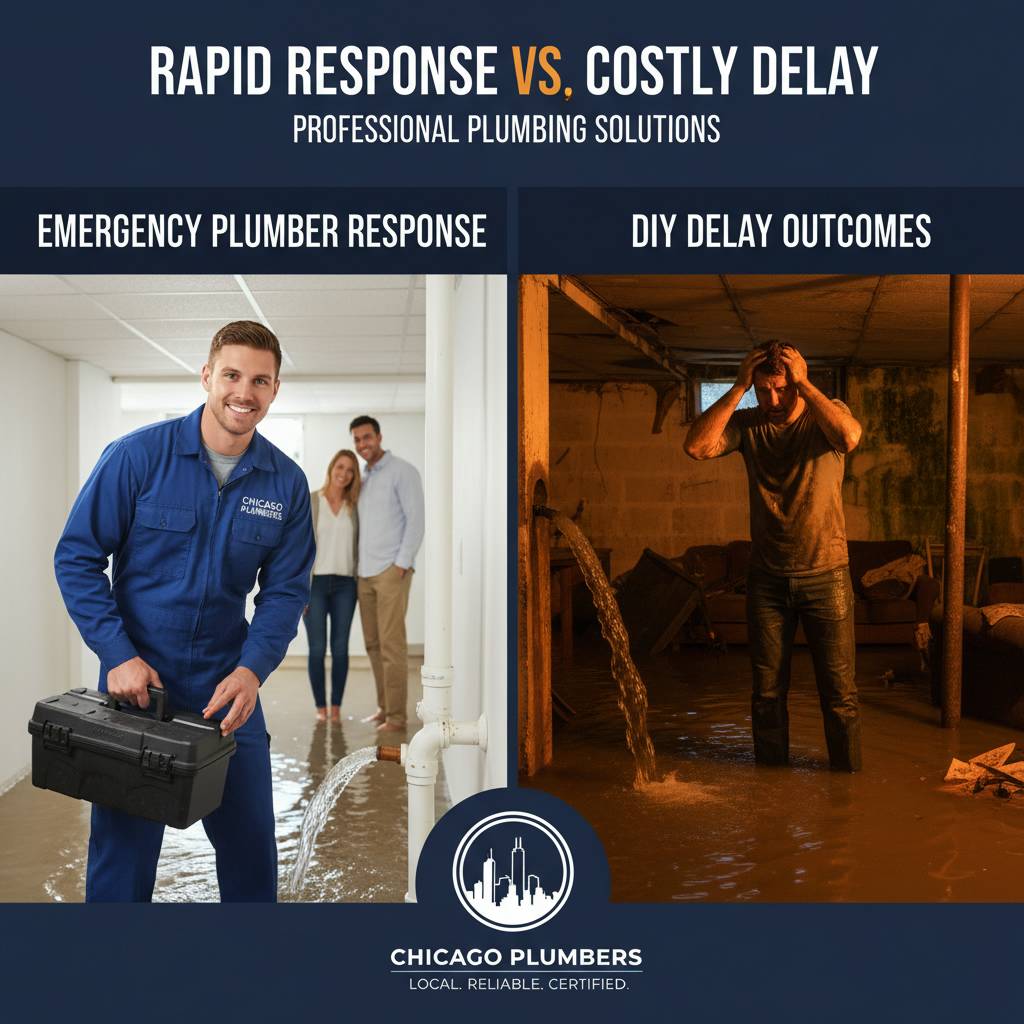 Below is a concise comparison summarizing typical outcomes when a homeowner calls an emergency plumber immediately versus delaying intervention to attempt DIY fixes. The patterns in these outcomes are consistent across many real calls and demonstrate where delay disproportionately increases cost and risk.
| Aspect | Emergency Plumber Response | DIY Delay Outcomes |
|---|---|---|
| Time to secure system | Within minutes to an hour | Hours to days, often incomplete |
| Likelihood of secondary damage | Low when mitigated quickly | High-mold, rot, electrical issues |
| Diagnostic accuracy | High-professional tools and training | Low-root causes often missed |
| Cost over time | Often lower due to limited repairs | Often higher due to compounded damage |
| Health and safety risk | Managed and reduced | Increased exposure to contaminants and hazards |
How to decide: triage steps for homeowners
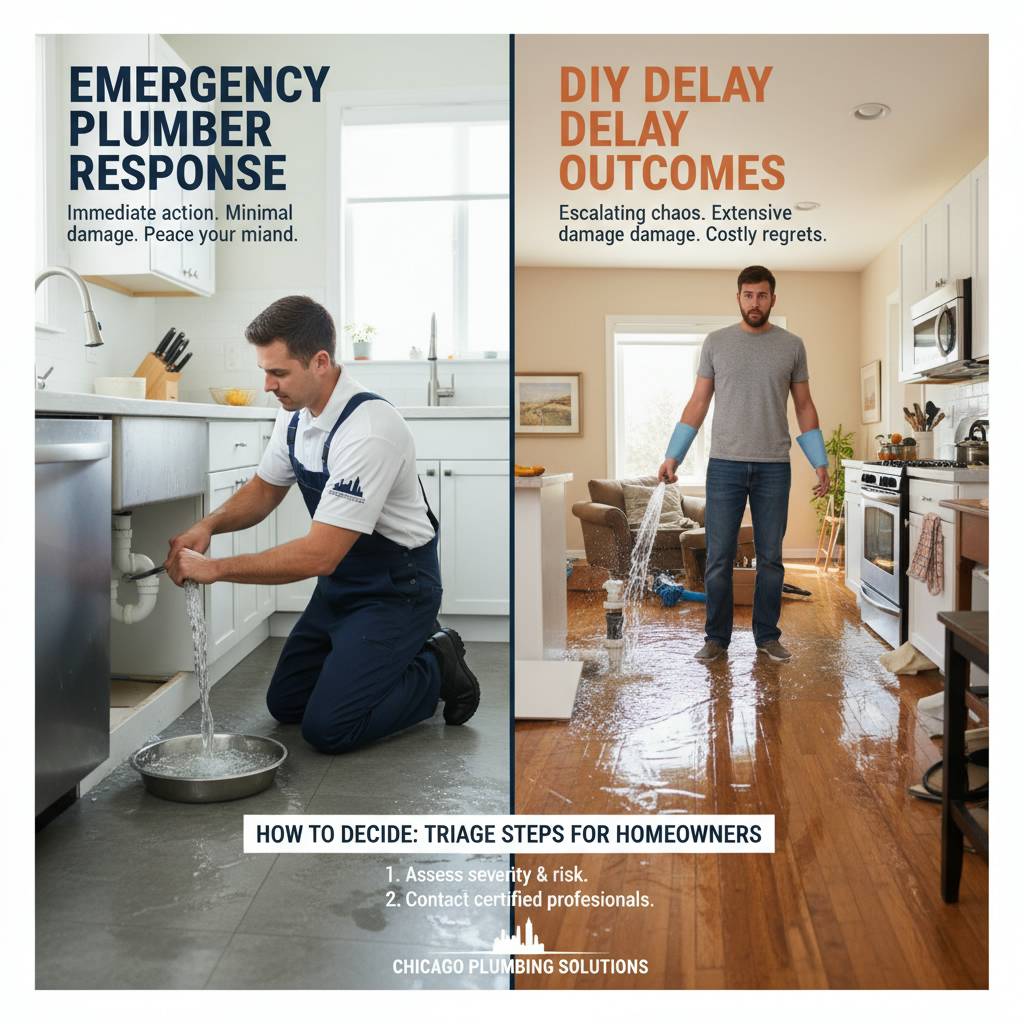 Not every plumbing issue requires an immediate emergency visit, but distinguishing between problems that can wait and those that cannot is critical. Use these triage steps to help decide: first, determine whether there is active flooding, risk to electrical systems, sewage backup into living spaces, or inability to isolate the water source. If any of those are present, call an emergency plumber right away.
If the problem appears contained-such as a slow drip from a faucet that does not soak surrounding material-you can take temporary steps while arranging a professional repair. These include turning off localized valves, placing protective barriers to prevent water spread, and documenting the issue with photos. Even for non-emergencies, contacting Chicago Pipe Essentials for an assessment can prevent escalation; call 312-555-4821 if you're unsure how to proceed.
- Immediate call: uncontrolled flooding, sewage in living areas, electrical contact with water.
- Short-term professional scheduling: slow leaks pooling on hard surfaces, moderate loss of hot water, suspected small pipe corrosion.
- Routine service: dripping faucets, running toilets, or minor fixture replacements without current water intrusion.
Practical temporary measures that do not replace professional mitigation
There are safe, limited actions a homeowner can take to minimize damage before a professional arrives. Shut off the main water supply if a large mainline leak is present, and turn off electricity to rooms affected by standing water if it is safe to do so. Use towels, mops, and a wet vacuum to remove surface water from non-porous floors and place plastic sheeting over damaged furniture to delay seepage.
Avoid risky DIY interventions such as attempting to solder or cut pipes while the system is pressurized, or using chemical drain cleaners in cases of suspected sewer backup, because these actions can make the problem worse or create hazardous conditions for responders. If you use a temporary clamp or tape, understand it is a stopgap measure and arrange for a permanent professional repair without delay. When in doubt, call an emergency technician to evaluate and perform safe mitigation.
Cost, health, and insurance considerations
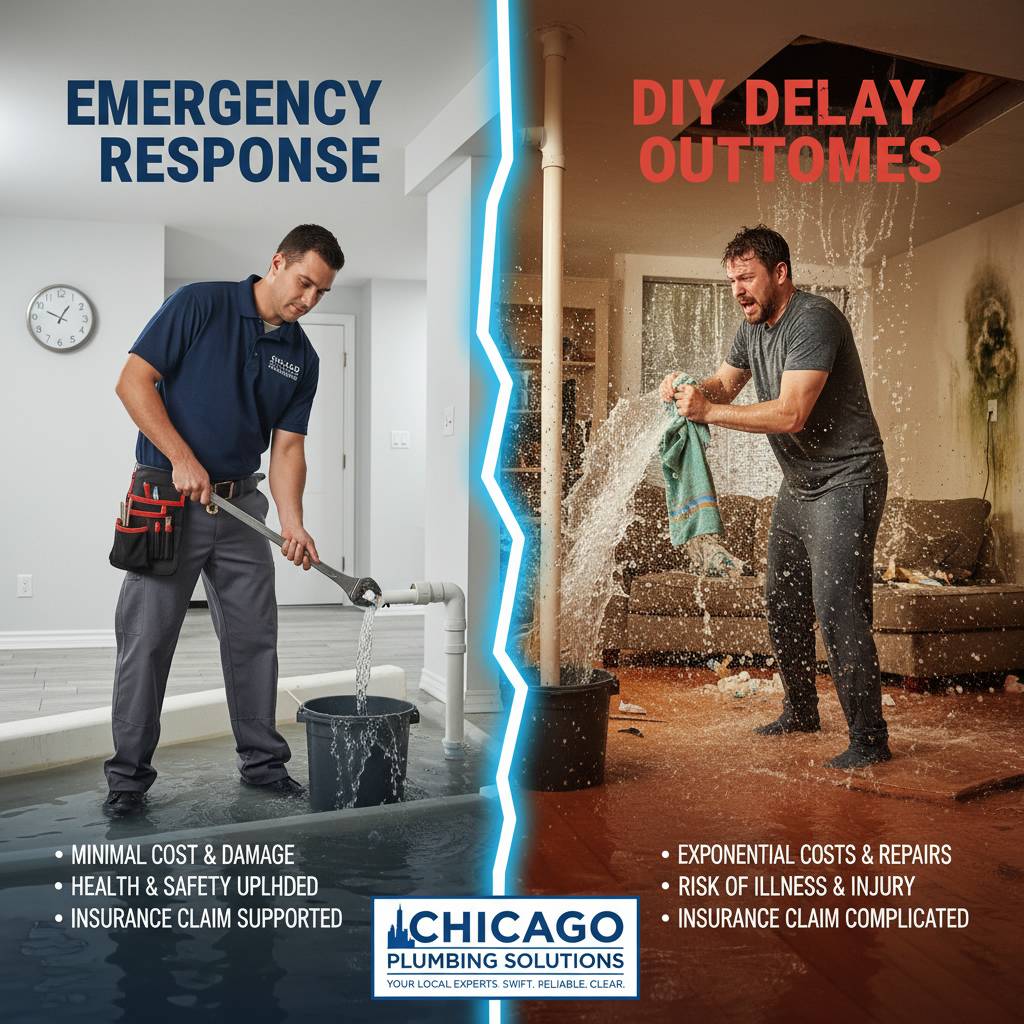 From a financial perspective, the difference between early professional intervention and delayed DIY fixes is often stark. Emergency mitigation preserves materials and reduces the scope of reconstruction; waiting frequently converts a fixture replacement into structural rebuild and mold remediation. Many insurance policies require reasonable mitigation efforts, but they may not cover damage that results from neglect or delayed action, so timely documentation and professional involvement can improve claim outcomes.
Health is another key factor. Sewage contamination and mold exposure create respiratory and infectious risks. Quick professional response includes containment, sanitation, and recommendations for safe remediation. These measures protect occupants and minimize liability for anyone renting or selling the property. If health symptoms appear after a delay-such as recurring respiratory issues or allergic reactions-professional remediation and medical consultation should happen promptly.
Frequently asked questions
Is calling an emergency plumber always more expensive than trying a DIY fix?
Not necessarily. While an emergency call may carry a higher initial fee, it often prevents expensive secondary damage that can multiply costs. A professional can also provide temporary stabilizing repairs that avoid repeated failures, which reduces total expenditure. Considering time, risk, and remediation costs, early professional help frequently ends up being the more economical choice.
How fast does mold grow after water damage?
Mold can begin to grow within 24 to 48 hours in the right conditions-warmth, moisture, and organic materials. Prompt drying, dehumidification, and professional assessment greatly reduce this risk. This is a primary reason many homeowners who delay professional intervention experience higher remediation costs and longer disruption to living spaces.
Can I use duct tape or epoxy as a long-term fix for a leaking pipe?
These products can serve as temporary measures to buy time until a professional arrives, but they are not reliable long-term solutions. Pressure, temperature changes, and existing corrosion can cause such patches to fail unpredictably. A qualified plumber will install a durable repair that restores system integrity and reduces the likelihood of recurrence.
Summary and recommended next steps
When weighing a comparison emergency plumber response versus DIY delay outcomes, the evidence favors early professional intervention for situations involving active flooding, sewage, electrical risk, or when the source cannot be securely isolated. Quick, professional mitigation minimizes structural damage, reduces health risks, and typically lowers overall cost. Economically and practically, calling an emergency plumber early is often the safest decision.
For less acute issues, sensible temporary measures combined with prompt scheduling of a qualified technician reduce the chance that a small problem escalates to an emergency. If you are uncertain of the severity, err on the side of caution-contact Chicago Pipe Essentials for an evaluation. Our team can assess risk, provide safe mitigation, and recommend durable repairs.
Immediate assistance is available-call 312-555-4821 for fast evaluation and emergency response.
If you prefer, use our short checklist before contacting a professional: identify active water or sewage, check for electrical contact, isolate the shutoff if safe, and document the damage with photos. This information helps responders act faster and with clearer priorities when they arrive.
We hope this guide helps you understand how response timing affects outcomes and why professional mitigation often prevents compounding harm. For reliable, knowledgeable assistance from technicians who prioritize safety and long-term solutions, reach out to Chicago Pipe Essentials at 312-555-4821. We're ready to evaluate your options and help you choose the safest route.