Emergency Shutoff Procedures For Homeowners
Homeowners should know emergency shutoff procedures to stop water flow quickly and prevent damage. Chicago Pipe Essentials provides step by step instructions and local guidance for quick action. Call 312-555-4821 for immediate help if you cannot complete a shutoff safely. We empower residents to reduce harm with clear directions.
Water intrusion can escalate from a small drip to catastrophic damage in minutes. That's why knowing emergency shutoff procedures for homeowners is essential - it gives you a reliable, immediate response when a pipe bursts, a hose fails, or a supply line separates. Chicago Pipe Essentials helps residents recognize the fastest, safest way to stop the flow and reduce loss until professional help arrives. This page explains what to do, where valves typically are, and how to act calmly and effectively.
Every household is different, but the principles are the same: locate the valve, isolate the problem, turn off the water, and secure the scene. We'll walk through clear steps for indoor shutoffs, outdoor curb stops, and fixture-level isolation so you can choose the safest approach. If at any point you feel unsafe or the shutoff is inaccessible, contact our team immediately at 312-555-4821.
Why immediate shutoff matters: risks and real-world impact
Stopping the water quickly limits structural damage, reduces the chance of mold growth, and prevents electrical hazards. A continuous leak can saturate framing, drywall, and insulation within hours; drywall softens and insulation loses R-value quickly. Beyond material loss, repairs become more expensive and invasive the longer water flows. Acting fast preserves your home and saves time and money during repairs.
There's also a safety dimension: running water near electrical systems, appliances, or furnaces creates a shock and fire risk. Turning off the supply reduces those risks and gives emergency responders clearer, safer access to affected areas. In multi-unit buildings, a timely shutoff can protect your neighbors as well as your property, which makes knowing these procedures a community asset.
Locate your shutoff valves: where to look and how to identify them
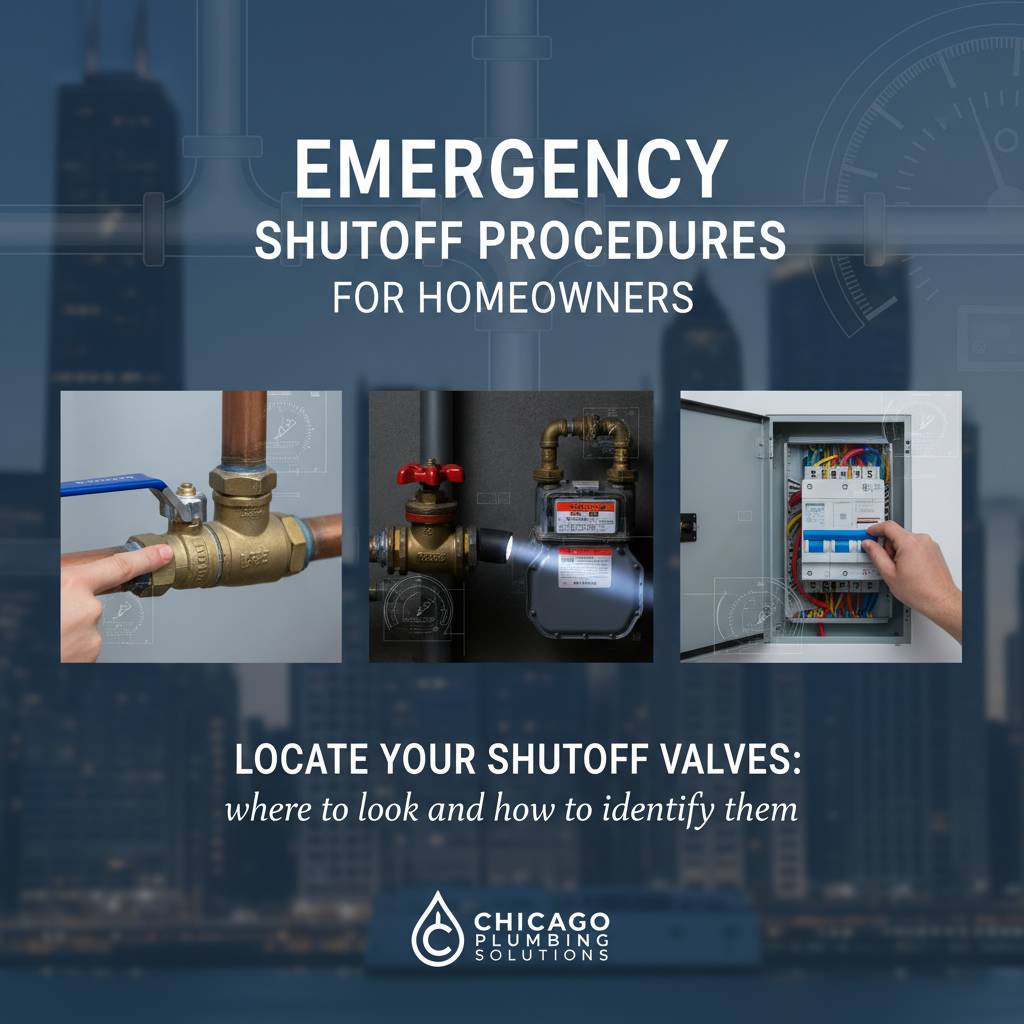 The main house shutoff is the single most important valve for emergency control. Inside homes it's commonly found in the basement or crawlspace near where the water line enters the house. In warmer climates it may be in a utility closet, garage, or mechanical room. For homes without basements, check the perimeter wall closest to the street or the front foundation where the water service comes in.
Outside, the curb stop or meter valve is often in a covered box at the property line near the street. Municipal water meters usually include a shutoff on the homeowner side of the meter. If your home is in a flood-prone area, know the meter location and whether your municipality permits homeowners to operate the curb stop - in many jurisdictions, only utility workers should operate the street-side valve.
Common valve types include ball valves, gate valves, and compression-style curb stops. Ball valves have a lever handle and stop with a quarter-turn; gate valves turn multiple times and can be harder to operate after years of inactivity; curb stops usually require a special key or wrench. The table below summarizes these types and what to expect when you encounter them.
| Valve Type | Appearance | Operation | Notes |
|---|---|---|---|
| Ball valve | Lever handle (plastic or metal) | Quarter-turn on/off | Reliable after long periods; easy for homeowners |
| Gate valve | Round wheel or square stem | Multiple turns to open/close | Can seize with corrosion; use steady force |
| Curb stop / Meter valve | Covered box at ground level | Special key or wrench; turn to close | Sometimes restricted to utility staff |
Step-by-step emergency shutoff procedures
Below are practical, sequential steps to follow when you discover an active leak. Read them now so you're prepared; in an emergency, mental familiarity speeds action. Keep a small toolkit near your main shutoff: a pipe wrench, adjustable wrench, screwdriver, flashlight, and a curb key if applicable. Wear shoes and a flashlight when working in dark or slippery areas.
Immediate actions - the first 6090 seconds
First, stay calm and assess the scene quickly. If water is spraying near electrical outlets, circuit panels, or appliances, avoid direct contact and shut off electricity at the main breaker if you can safely do so from a dry location. If you smell gas or see structural damage, evacuate and call emergency services. Then move to shut off the water using the fastest accessible valve.
- Locate the main shutoff valve inside the house or the curb stop outside.
- Turn off appliance-specific valves for washing machines, dishwashers, or ice makers if a single fixture is the issue.
- Open the highest faucet to relieve pressure and then open a low drain to help empty pipes once the supply is off.
Operating indoor shutoffs
If your main shutoff is an indoor ball valve, rotate the lever 90 degrees so it's perpendicular to the pipe - that is the closed position. For gate valves, turn the wheel clockwise until it stops; don't force it beyond firm resistance to avoid breaking the stem. If the valve resists, use a steady, controlled force with a wrench and back off if it won't budge to avoid damaging the valve.
After closing the valve, open a faucet at the lowest point in the house (often a basement sink) and one at the highest point (an upstairs tub) to drain remaining water and reduce pressure. This also helps limit the amount of water that can leak from a damaged section below the shutoff. Keep a bucket and towels handy to contain residual drips.
Operating outdoor curb stops and meters
For curb stops in a box at the street, remove the lid and use the appropriate curb key or meter wrench. Typically, you'll turn the key clockwise to close. If you encounter confusion about which direction to turn, take note of how other valves on the block operate or call your water utility for quick confirmation. If the curb stop is frozen or heavily corroded, do not apply excessive force - call a professional.
Remember that municipal shutoffs and curb stops can be near traffic; use caution when working close to the street and keep children and pets away from the area. If you cannot access the curb stop because of snow, mud, or debris, call Chicago Pipe Essentials or your local utility for guidance rather than risking injury.
After the shutoff: containment, assessment, and next steps
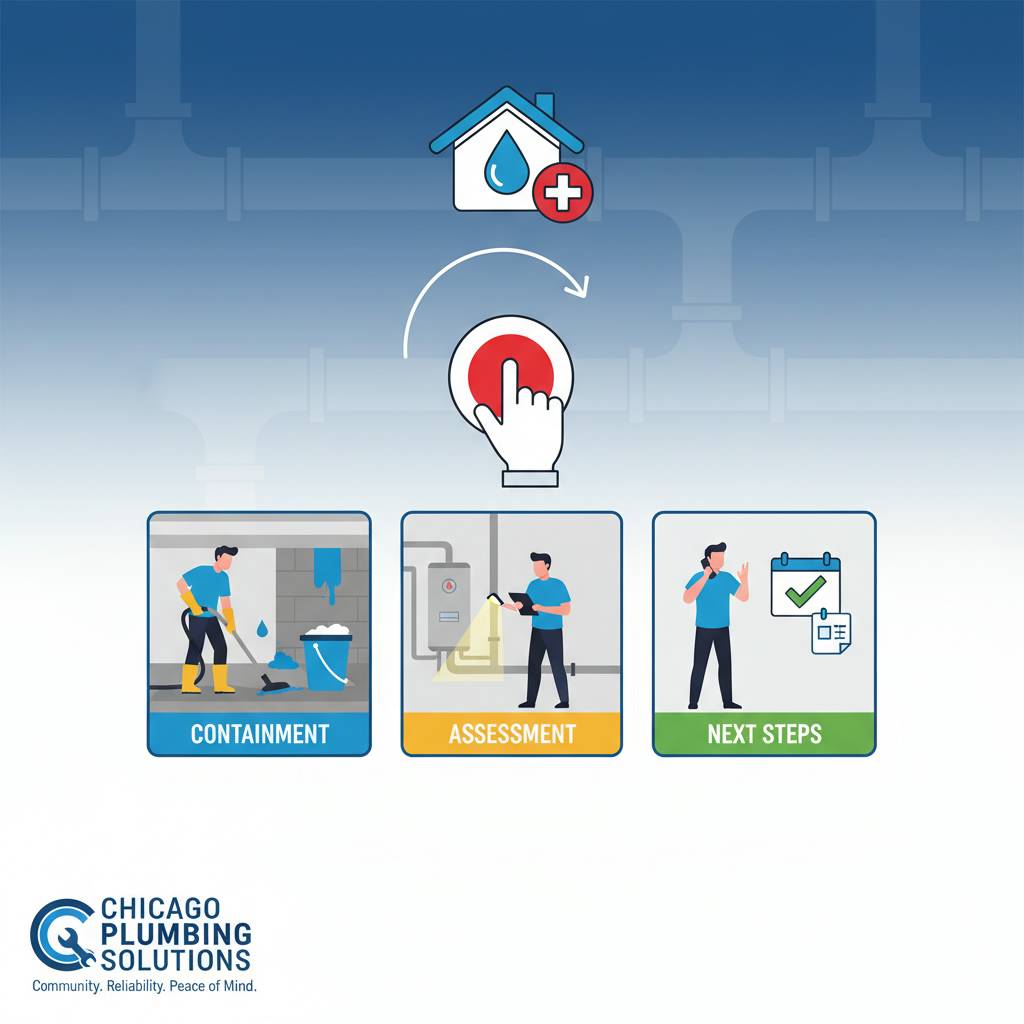 Once the flow is stopped, focus on limiting further damage and documenting the incident for insurance or repair planning. Remove standing water, move furniture and valuables away from wet areas, and protect electronics. Use wet/dry vacuums or mops and set up fans and dehumidifiers to accelerate drying. Opening windows can help ventilation if outside conditions are safe.
Photograph damage and the shutoff location for your records. Make a simple inventory of affected items and note the time you shut the water off - insurers often request this information. If the leak originated from an appliance, unplug it and have it inspected by a qualified technician. Do not operate damaged appliances until they've been checked for electrical and water-safety integrity.
Contact a licensed plumber promptly to repair or replace the damaged pipe, valve, or fixture. If you need immediate professional assistance, Chicago Pipe Essentials provides step-by-step guidance and local response options. For urgent situations you cannot safely control, call 312-555-4821 and our team will advise or dispatch help if available in your area.
Troubleshooting, maintenance, and preventing future emergencies
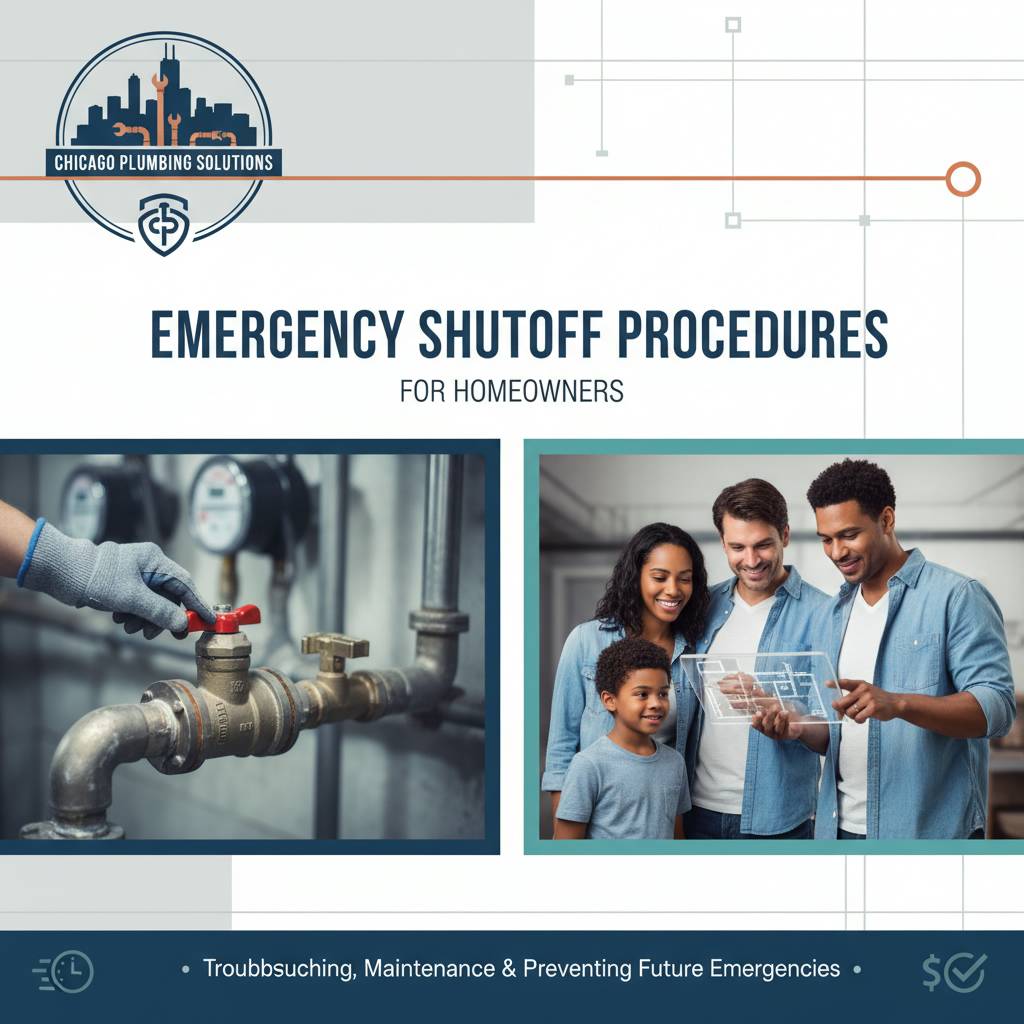 Valves that haven't been used regularly can seize or leak when turned. Schedule a simple maintenance check at least once a year: exercise the main shutoff by turning it off and on to keep the stem free, inspect for visible corrosion, and make sure the valve remains accessible. Mark the valve location clearly so any household member can find it quickly in an emergency.
- Test shutoffs quarterly or semi-annually to ensure operation.
- Insulate exposed pipes, especially in unheated crawlspaces, attics, and exterior walls, to reduce the chance of freezing.
- Replace older gate valves with ball valves for easier quarter-turn operation when feasible.
- Keep a curb key and basic tools near your utility area or in an emergency kit.
If a valve is stuck or leaks after operation, avoid repeated forceful attempts that could break the valve. A broken valve may require mainline repair. Instead, call a licensed plumber. Small investments in preventative replacement or routine maintenance pay off by reducing the chance of emergency disruptions and expensive repairs.
Common scenarios and practical responses
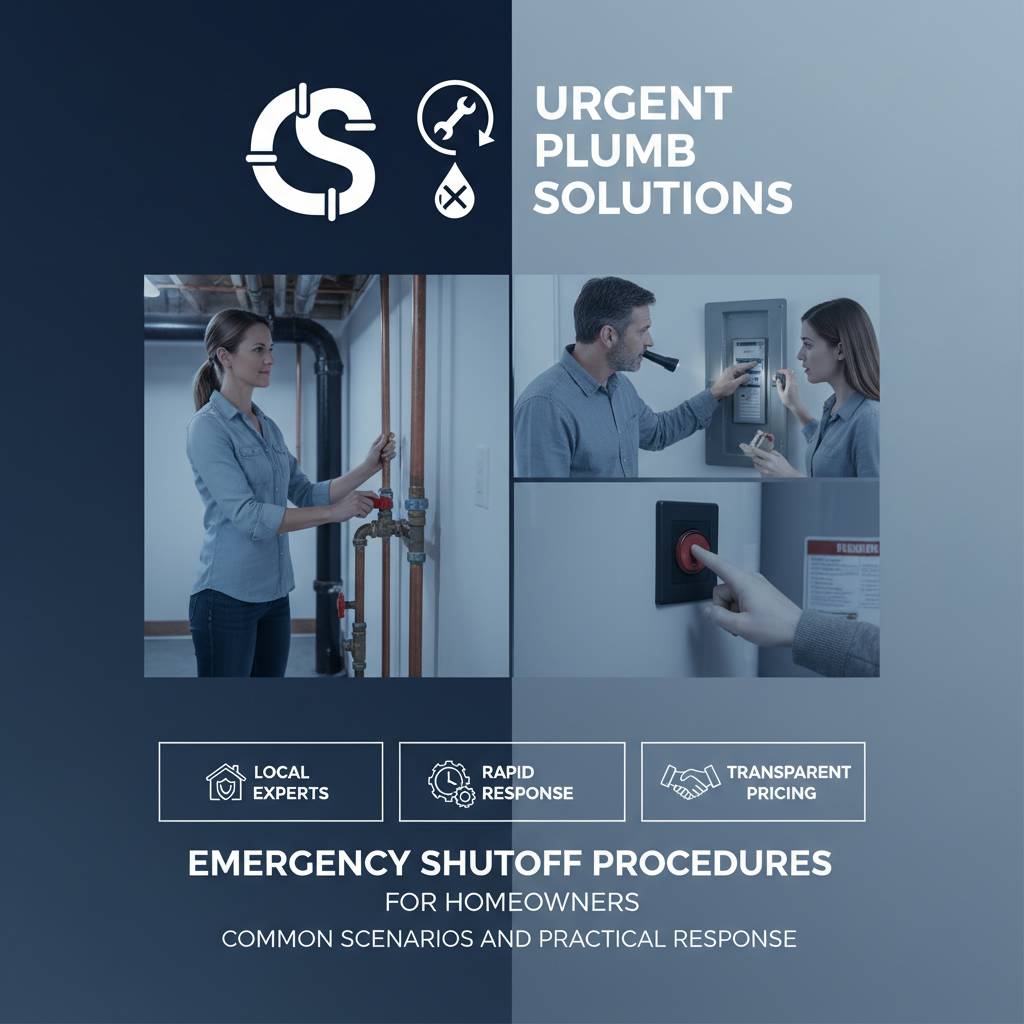 Knowing the scenario and response ahead of time helps you act confidently under pressure. For a burst appliance supply line - such as a washing machine or dishwasher - close the appliance supply valves immediately; these are often located behind the appliance. For a ruptured visible pipe, locate and close the nearest valve or the main house shutoff and then isolate electricity to nearby circuits if water is near outlets or panel boxes.
If a pipe has frozen and then burst, shut off the water, open faucets to relieve pressure, and call a plumber for repair and thawing advice. Do not attempt to thaw large sections with an open flame or high-heat sources. Small localized thawing using a hair dryer or heat tape applied by a professional is safer. If you're in a multi-unit building, notify building management immediately so they can act to protect other units.
Here's a concise emergency checklist you can print and keep near your main shutoff:
- Turn off main water supply.
- Open highest and lowest faucets to drain lines.
- Isolate electrical power if water contacts electrical devices.
- Remove valuables and start drying efforts.
- Call licensed plumbing help or Chicago Pipe Essentials at 312-555-4821 if you cannot secure the shutoff safely.
When you cannot shut off safely - call for immediate help
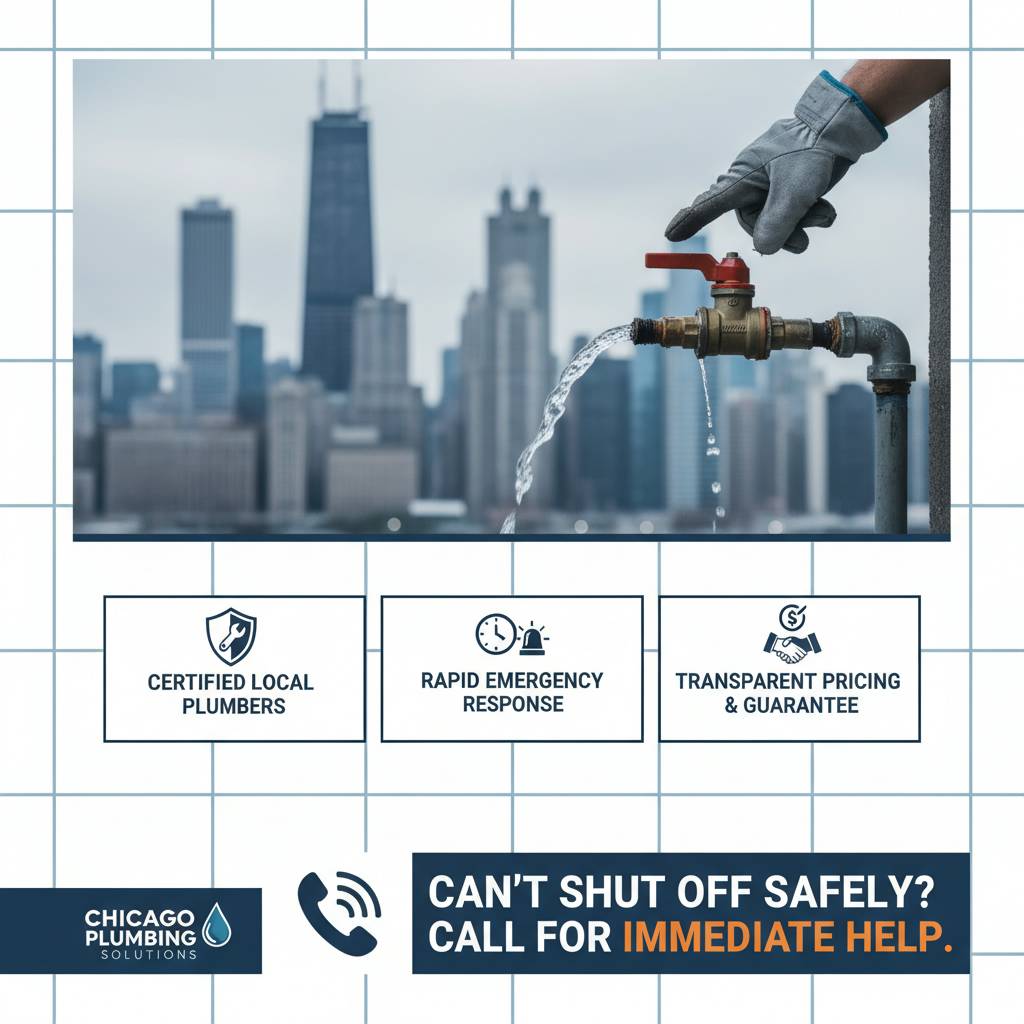 There are times when the shutoff is inaccessible, the valve is seized, or the situation involves unsafe conditions (electrical contact, heavy flooding, structural instability). In those cases, do not attempt risky maneuvers. Evacuate the area if necessary and call for professional assistance. Chicago Pipe Essentials can provide local guidance and emergency support to secure the situation and guide next steps.
If you need in-person help right away, contact our emergency line at 312-555-4821. If you prefer a specific technician, ask for CPE when you call and we'll do our best to connect you with someone familiar with your neighborhood's common water-service setups. Our team is trained to assess safety, advise temporary containment measures, and arrange repairs.
Keeping a printed copy of these instructions and the phone number stored near your main water valve and with your emergency kit is a smart move. A short family briefing on who should take charge and where the shutoffs are will make everyone more confident if an emergency arises.
Quick reminder: acting quickly and calmly reduces damage and repair costs. If you're unsure or feel unsafe at any point, call for professional help rather than risk injury or worsening the situation.
When you need help protecting your home or restoring service after an emergency, Chicago Pipe Essentials is here to assist. Call us at 312-555-4821 for immediate assistance or to schedule a safety inspection and shutoff training for your household.
Take a few minutes today to find and mark your main shutoff and any appliance-specific valves. That small preparation will pay off if the worst happens. For questions, guidance, or emergency support, contact Chicago Pipe Essentials at 312-555-4821. We're committed to helping homeowners reduce harm with clear, practical directions and rapid local response.