
Average Emergency Plumbing Repair Cost Chicago
Knowing the average emergency plumbing repair cost in Chicago helps homeowners budget and compare options. Chicago Pipe Essentials provides transparent pricing estimates and explains common cost drivers. Call 312-555-4821 for a preliminary cost assessment tailored to your situation. We aim to reduce financial surprises and deliver fair value.
When a pipe bursts, a water heater fails, or a sewer backup threatens your home, the financial uncertainty can be as stressful as the emergency itself. This page explains the average emergency plumbing repair cost Chicago homeowners typically face, what drives those costs, and how to evaluate estimates so you're not caught off guard. Chicago Pipe Essentials aims to give clear, realistic expectations and practical guidance so you can act quickly and confidently.
We combine local market knowledge with typical repair scenarios to offer ranges and explanations rather than one-size-fits-all promises. If you prefer an immediate conversation, call 312-555-4821 for a preliminary cost assessment and to schedule an on-site evaluation. Our goal is to reduce surprises and help you choose solutions that balance urgency, longevity, and value.
Understanding the average emergency plumbing repair cost in Chicago
In Chicago, emergency plumbing calls typically cost more than scheduled repairs because they require immediate response, after-hours labor, and often expedited parts. The phrase average emergency plumbing repair cost Chicago covers a broad set of scenarios, from a simple leak needing a quick clamp to a complex sewer line collapse demanding excavation. Labor, parts, and the time of day all influence pricing, so averages serve as a guideline rather than a guarantee.
For a practical frame of reference, emergency service calls often include a trip and diagnostic fee, followed by labor and materials. Homeowners should expect different numbers depending on whether the incident happens during normal business hours or late at night or on a holiday. Having a clear idea of these typical components helps you evaluate estimates and avoid being surprised by line items on an invoice.
Common emergency plumbing problems and their cost ranges
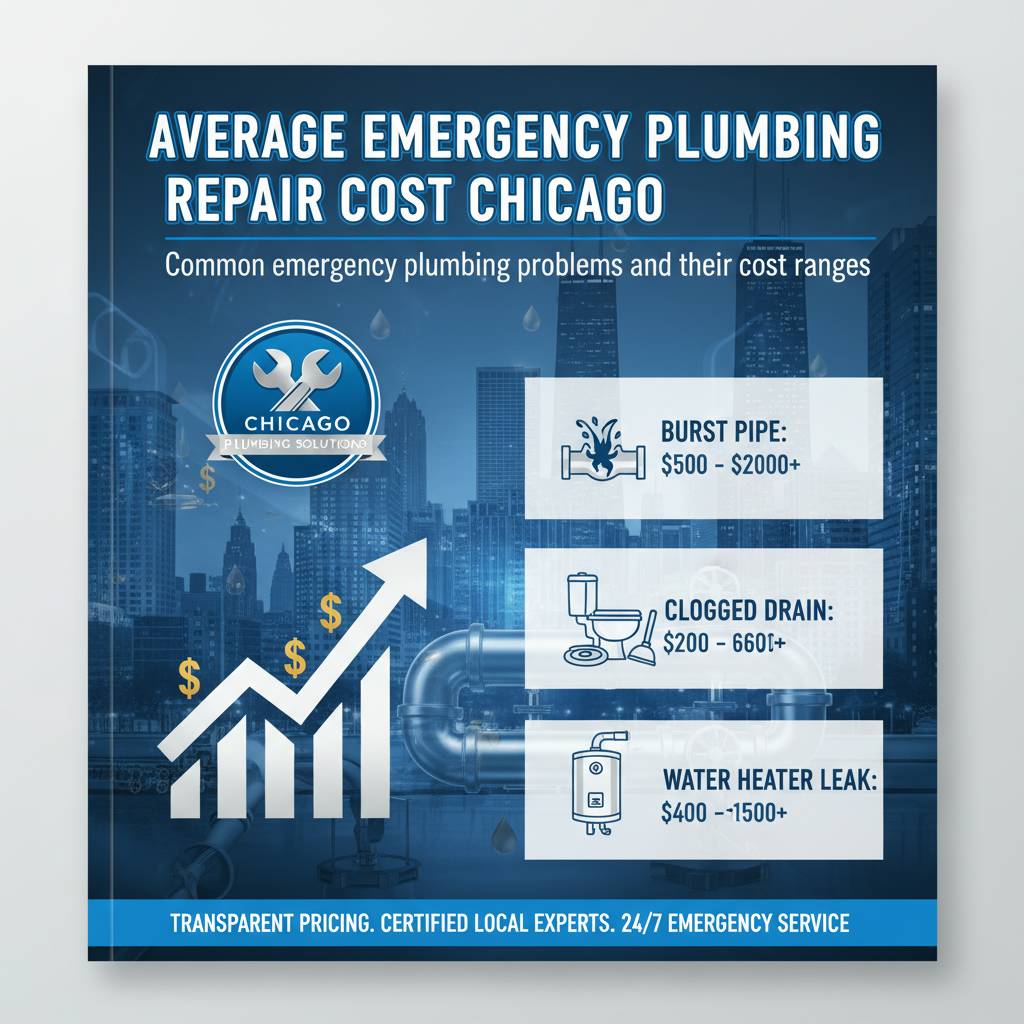 Certain plumbing failures occur more frequently and have reasonably predictable cost ranges. Below is a straightforward table showing typical emergency issues, a conservative estimated price range (including labor and parts), and a short note about what affects each range. These figures are intended as general guidance for Chicago-area homeowners confronting urgent repairs.
| Problem | Typical Emergency Cost Range | Notes |
|---|---|---|
| Minor leak repair (pipe, joint) | $150$450 | Depends on access, pipe material, and whether replacement parts are needed. |
| Water heater emergency repair | $300$1,200 | Replacement of elements or tank increases cost; gas vs. electric matters. |
| Sewer line backup or clog | $300$2,500 | Simple snaking is cheaper; camera inspection, root control, or excavation raise costs. |
| Broken or frozen pipe repair | $250$2,000 | Extent of damage, required demolition, and insulation or rerouting affect the total. |
| Fixture replacement (toilet, faucet) | $200$800 | Fixture type, access, and whether drywall or cabinets must be altered influences price. |
Remember that the low and high ends reflect different levels of complexity. A basic repair after-hours may sit near the lower range, while discoveries such as mold, structural damage, or the need for a permit and excavation can push a job into the higher bracket. Use these ranges to set expectations before an inspector arrives.
Primary cost drivers: what increases or decreases the final bill
Several core factors determine the final amount you'll pay when an emergency plumber responds. Labor rates vary with technician experience and union or non-union status, but time-of-day surcharges for nights, weekends, and holidays are often the largest single multiplier. The need for specialized equipment-camera inspections, hydro-jetting, or excavation machinery-also adds substantially to the bill.
Material and parts quality matter as well. OEM replacement parts or high-efficiency fixtures cost more than basic components but can offer longer-term savings. Accessibility is another major driver: repairs hidden behind walls or under finished floors require demolition and restoration, and those restoration costs are sometimes charged separately by contractors.
Other cost influencers to consider
- Diagnostic complexity: More time diagnosing equals higher labor charges.
- Permits and code compliance: Permit fees and code-upgrade requirements can add hundreds or thousands.
- Water damage mitigation: Drying, mold remediation, and cosmetic repairs increase totals.
- Emergency response time: Faster arrival windows often come with premium pricing.
How to compare repair estimates and avoid surprises
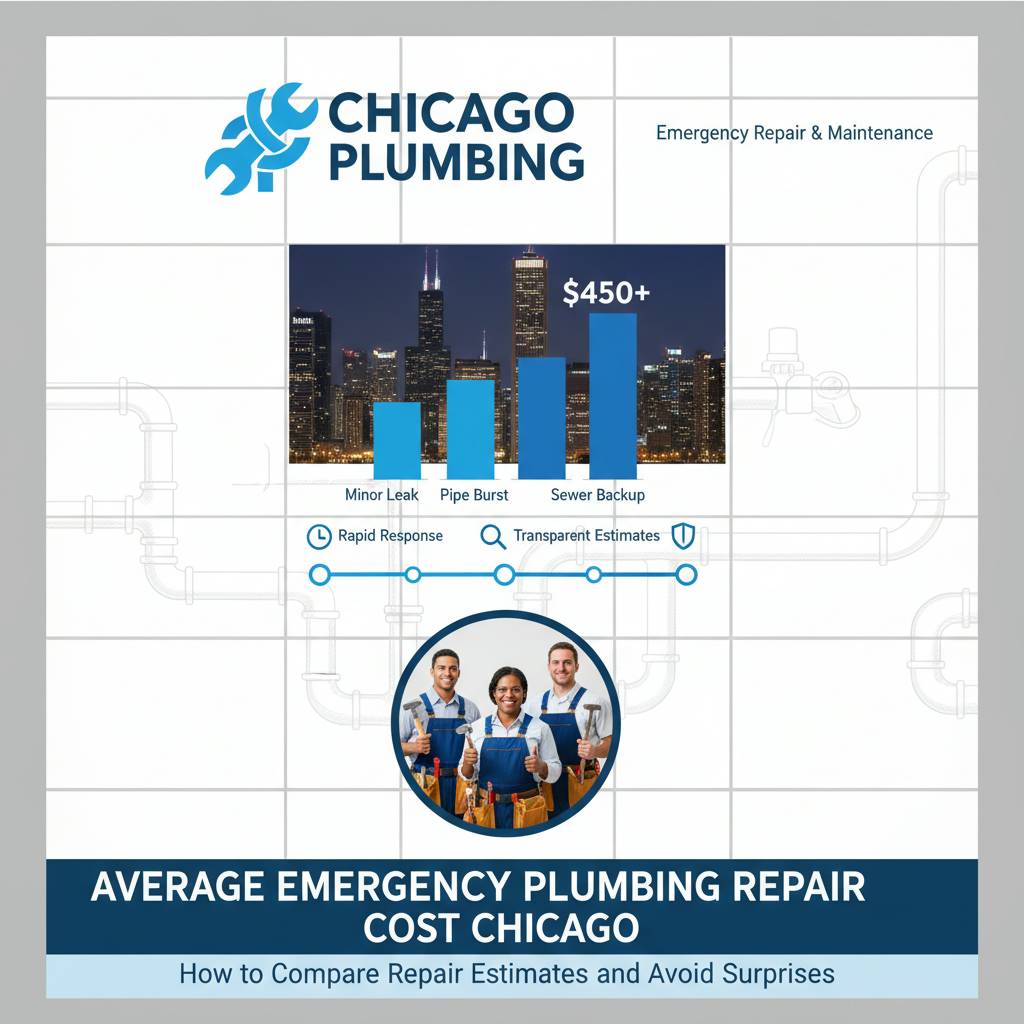 When you receive multiple emergency plumbing quotes, look beyond the total to compare how each estimate treats the trip/diagnostic fee, hourly labor rate, parts markup, and after-hours surcharge. An itemized estimate offers transparency and makes it easy to spot unusually high parts markups or vague labor descriptions. Ask providers to explain anything that's unclear before work begins.
Check credentials and safeguards: verify licenses and insurance, confirm warranty terms, and ask how they handle unforeseen findings. A reputable plumber will explain likely contingencies and provide a revised estimate before proceeding with additional, non-emergency work. Document the estimate in writing and keep receipts for any work completed in case future disputes or insurance claims arise.
- Request an itemized written estimate before work starts whenever possible.
- Ask what constitutes an emergency call and whether there's a separate flat emergency fee.
- Get the warranty terms for both labor and parts in writing.
- Confirm whether subcontractors or specialty trades are required and how they're billed.
Practical steps to reduce emergency costs and protect your budget
 Preventing emergencies is the most effective way to reduce costs. Regularly scheduled maintenance-such as annual water heater inspections, sewer line cleanouts every few years, and winterization steps to prevent frozen pipes-reduces the likelihood of urgent failures. Installing accessible shut-off valves and clearly labeling them can limit water damage if a leak occurs, which in turn limits repair scope and cost.
Homeowners should also evaluate insurance and warranty options. Some homeowner policies cover sudden water damage but exclude gradual leaks or preventive maintenance; separate water backup or service line coverage can offer additional protection. Keep records of routine maintenance; insurers and contractors often appreciate a documented service history when assessing claims or recommending repairs.
Transparent pricing process with Chicago Pipe Essentials
 At Chicago Pipe Essentials, we strive to make emergency pricing as predictable as possible without sacrificing the speed and quality of response. That begins with a clear explanation of our diagnostic charge, our emergency service fee (if applicable), and typical labor and parts practices. When CPE or one of our technicians arrives, you'll get a concise assessment and an itemized plan of action before any major work begins.
We emphasize realistic estimates and proactive communication. If the job changes in scope, we pause to discuss options and cost implications so you can approve or decline non-urgent work. Our goal is not only to complete repairs quickly but to help you make informed decisions that minimize long-term costs and reduce the chance of repeat emergencies.
Case examples and brief scenarios
 Scenario 1: A middle-of-the-night kitchen sink leak was caused by a failed supply line fitting. The technician arrived within an hour, shut off the water, replaced the fitting, and tested the system. The final bill reflected an after-hours trip fee, one hour of labor, and a replacement part-falling on the lower end of the emergency cost range because access was simple and no water damage was evident.
Scenario 2: A homeowner discovered a foul odor and backups from multiple drains. A camera inspection identified tree-root infiltration and partial collapse of the sewer pipe. The solution required excavation and a section replacement. Because the job involved equipment rental, excavation, and a permit, costs were significantly higher-demonstrating how underlying conditions can transform a common clog into a major repair.
Questions to ask when an emergency plumber is on site
During an emergency service visit, clear questions get clear answers. Ask what immediate steps will prevent further damage, whether a temporary repair is advisable until a full repair can be scheduled, what the estimated cost ranges are for suggested solutions, and how long the work will take. Understanding these points helps you weigh the urgency of full replacement versus temporary fixes.
- Can you stop the immediate damage now, and what will that cost?
- Is a temporary repair safe, or does it introduce additional risk?
- What parts and warranties come with the proposed repair or replacement?
- Will permits or inspections be required, and who pays those fees?
If you're facing an emergency and need a fast, trustworthy evaluation, reach out to Chicago Pipe Essentials. Our team is prepared to provide a clear, itemized assessment and practical options tailored to your situation. Call 312-555-4821 to speak with an experienced technician or to schedule an on-site inspection.
We understand the stress of urgent plumbing problems and aim to minimize both the disruption and the financial uncertainty. Contact Chicago Pipe Essentials now and let us help you get the situation under control with transparent pricing and trusted workmanship. Call 312-555-4821 for a preliminary cost assessment and to discuss next steps.